
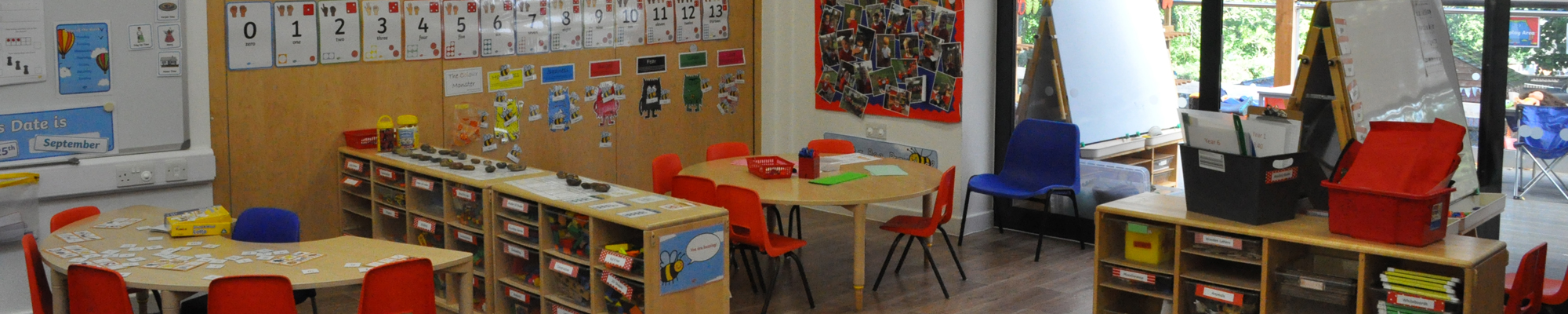

At Lambourn Primary School, we value all our students equally as individuals who have a wide range of ability and learning needs. We aim to remove barriers that may hinder students learning in order to provide them with the best opportunities to develop their interests and strengths and to meet their full potential, regardless of need.
Mrs Stapley our SENDCo (Special Needs and Disabilities Coordinator) supports the class teacher in identifying the additional needs of children through observation, assessment and discussions with parents, carers and previous schools. In the first instance, the class teacher develops individually tailored learning through differentiation, supported by learning programmes that take place outside of the classroom for small groups or as 1:1. These are led by our experienced team of support staff. We have a range of interventions in place that enhance the learning in phonics, literacy, maths and emotional well -being.
When necessary, the SENDCo will contact the outside agencies available to West Berkshire schools. They provide us with help and support to ensure we are providing the best learning experience for our pupils.
At every stage of the process we consult with parents who are invited into school to meet with the SENDCo and class teacher. We believe it is vital to maintain positive working relationships with parents in order to best meet the needs of the children.
If you have concerns about your child’s specific learning needs, please contact Mrs Stapley at via the school office 01488 71479

The SEND Information Report is a guide which aims to detail our ‘Local Offer’ to children and families who have an interest in, or need for SEN provision. The support which can be offered in school is part of the wider Local Authority Offer, details of which can be found at:
West Berkshire Local Offer: Special Educational Needs and Disability (SEND) Local Offer – West Berkshire Council
The Children and Families Bill was enacted in September 2014. From this date, Local Authorities (LA) and schools are required to publish and keep under review information about services they expect to be available for children and young people with special educational needs (SEN) aged 0-25. This is referred to as the ‘Local Offer.’ The intention of the Local Offer is to improve choice and transparency for families. It is also a fantastic resource for parents in understanding the range of services and provision available in their area for children and young people from 0 to 25 who have Special Educational Needs and/or a Disability (SEND).
West Berkshire Local Offer: Special Educational Needs and Disability (SEND) Local Offer – West Berkshire Council
The Special Educational Needs Code of Practice 2014 states that a child or young person has SEN if they have a learning difficulty or disability which calls for special educational provision to be made for them. A child of compulsory school age or a young person has a learning difficulty if they:
a. Have a significantly greater difficulty in learning than most others of the same age; or
b. Have a disability which prevents or hinders them from making use of educational facilities of a kind provided for others of the same age in mainstream schools or mainstream post-16 institutions.
Special Educational Needs can broadly be defined by the following four areas of need:
• Communication and Interaction
• Cognition and Learning
• Social, Emotional and Mental Health
• Sensory and/or Physical Needs
The individual needs of most children and young people will be met by high quality teaching (Quality First Teaching) that is differentiated and personalised. Whilst disabilities generally affect children long term, not all SEN difficulties should be seen as ‘Life Long.’ SEND is seen by our school as the child requiring provision that is additional to, or different from the rest of the class. For example, they may have additional needs due to dyslexia, coordination problems, number understanding, significant sight problems – the list is endless and every child is unique – however a carefully planned approach is needed, additional to high quality class teaching for these children to achieve as well as they can.
All parents of pupils at Lambourn Primary are invited to discuss the progress of their child on a number of formal occasions during the year, as well as receiving a written report at the end of the academic year. However, as part of our parent teacher partnership, we encourage arranging an informal meeting outside these formal occasions to discuss any initial concerns or potential barriers to learning you/we may have identified.
1. If you are concerned about your child’s behaviour or progress, please initially speak to their class teacher.
2. For further advice and support, you might like to speak to the school SENCo.
The SENDCo at Lambourn is Naomi Stapley who is a qualified teacher of all primary ages and who has achieved the National Award for SEND Co-ordination. You can reach Naomi by calling the school office on 01488 71479 or emailing [email protected]
3. If, after following this communication pathway, you remain concerned, please make an appointment via the school office team with the Principal, Maria Cupit.
Our complaints’ policy can be found on the school website
There are three categories of SEND at East Sheen Primary School. These are children in receipt of:
• An Outcome Grid; the children are overseen by the school, and the school and parents initiate, review, amend, and cease support for children whose needs are seen as ‘Outcome’ level. Each term the children will be given realistic and achievable goals to work towards.
• School Action Plan (SAP); these children have been identified as needing a more detailed support plan to enable their access to learning. A SAP is considered with a view that an EHCP may be required in the future. Teachers will meet with the SENCo and parents to put a detailed plan in place with achievable targets and steps to success.
• Education, Health and Care Plan (EHCP); historically, children who had higher needs were issued a ‘statement,’ by the Local Authority, now known as an Education, Health and Care Plan (EHCP) to encompass support from education, health and/or social care. Children with needs at this level have their plans initiated and ceased by the Local Authority, but the school and parents contribute to the review and monitoring process at least annually.
At Lambourn Primary, we can make provision for every kind of frequently occurring special educational need without an Education Health and Care Plan. For example, dyslexia, dyspraxia, speech and language needs, autism, ADHD, learning difficulties and behavioural difficulties. This list is not exhaustive; there are other kinds of special educational needs that do not occur as frequently, and with which the school is less familiar, but we can access training and advice so that these kinds of needs can be met.
The school has experience of meeting the needs of pupils with Education Health and Care Plans with the following kinds of special educational need: autism, Global Learning Delay, learning difficulties, Ehlers Danlos Syndrome, behavioural difficulties, and speech and language difficulties. Decisions on the admission of pupils with an Education Health and Care plan are made by the Local Authority.
The admission arrangements for pupils without an Education, Health and Care Plan do not discriminate against or disadvantage disabled children or those with special educational needs and will follow the usual school admissions procedures.
At Lambourn, class teachers monitor the progress of all pupils regularly as part of a review cycle. We also use a range of assessments with pupils at various points during the year to assess phonics knowledge, reading, spelling, writing, maths and science knowledge. There is a statutory phonics screen in Year 1, multiplication check in Year 4, as well as end of KS2 SAT assessments.
The principle of early identification and intervention underpins our approach to identifying those pupils who need extra help. This is often put in place, even if a special educational need has not been identified. This extra support will enable the pupil to catch-up/keep-up. Examples of extra support are:
Small group teaching for literacy and numeracy skills, additional phonics sessions, speaking and listening interventions, emotional support, additional reading support, fine/gross motor skills groups (OT) and 1:1 mentoring session with an adult; this extra support does not imply that the pupil has a special educational need.
If improvements in progress are not seen following this normal provision, we may arrange a meeting with parents to gain a picture of any barriers to learning. At this meeting, we discuss if the barriers are temporary and discuss the additional steps we will take to help us address these needs better. From this point onwards, if the need is identified as a significant barrier to learning, the pupil will be identified as having special educational needs because specialist educational provision is being made. Parents are formally notified that their child has special educational needs and will be invited to all planning and reviews of this provision. These meetings are incorporated into the parent/teacher consultation appointments in the second half of the autumn and spring terms. In the summer term, the children receive a written report and an appointment can be made to discuss the report or any other concerns.
At times, it may be necessary to consult with outside agencies to receive more specialised expertise. The purpose of this more detailed assessment and review is to understand what additional resources and different approaches are required to enable the pupil to make better progress. These are shared with parents, put into an Outcome Grid and reviewed regularly; they are refined/revised if necessary. At this point, because the pupil requires additional and extra provision, we will have identified that the pupil has a special educational need. If the pupil makes good progress using this additional and different intervention (but would not be able to maintain this good progress without it) we will continue to identify the pupil as having a special educational need. If the pupil can maintain good progress without the additional, different resources/interventions, he or she will cease to be identified with special educational needs and taken off the school SEN register.
We ensure that all teachers and support staff who work with the pupil are aware of the support (Outcomes) to be provided and the teaching approaches to be used. The pupil’s progress will be monitored through ongoing whole school assessment, teacher assessment, and additional reading, spelling and numeracy assessments, when necessary.
Sometimes, the child may need some extra specialist support. The school works in partnership with external agencies to offer additional support where necessary e.g. Educational Psychologist, School Nurse, Bereavement Counselling, Family Hub Support, Social Services, Occupational Therapy, Speech and Language Therapy, Physiotherapy, Drama Therapy and the Mental Health Support Team (MHST). These agencies offer advice to the school in various forms, including drop in clinics, staff training, parent meetings and ideas for teaching strategies. The support of the external agencies is not limitless and therefore the process is consultative. Parents will be informed and permission for direct support is required where the school and/or agency identifies this need.
At our school, we understand that moving to secondary school is a big step, especially for children with Special Educational Needs and Disabilities (SEND). To help make this transition as smooth as possible, we work closely with families, the child, and the new school to plan ahead. We arrange extra visits to the secondary school, offer social stories and visual supports, and give children the chance to meet key staff members in advance. Our SENDCo shares important information to ensure the new school understands each child’s needs, and we provide lots of emotional support along the way. Our goal is to make sure every child feels confident, prepared, and excited for this next stage in their journey.
A named governor, Catherine Mills, is responsible for monitoring Special Educational Needs provision; she does this through termly focus visits and reports to governors.
SEND Information Report for Lambourn CofE Primary School 2025